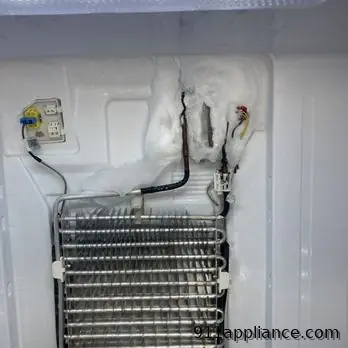
The year is 2026. You’re standing in your kitchen, staring at a clanking dishwasher, a refrigerator that’s decided to freeze everything but the actual ice maker, or a dryer that’s started to sound like a jet engine warming up for takeoff. The dreaded question looms: “Is it worth fixing this appliance?” It’s a decision that can save you hundreds, or even thousands, of dollars. But it’s not just about money; it’s about environmental impact, convenience, and the emotional attachment you might have to a trusty kitchen companion.
Table of Contents
- Understanding the Nuance of the 50% Rule
- Below 30% Repair Cost: A No-Brainer Repair
- Appliance-Specific Considerations: Tailoring the Rule to Your Machine
- Dishwashers: The 9-12 Year Rule
- Refrigerators: The 7-10 Year Sweet Spot
- Beyond the Numbers: Other Critical Factors in Your Decision
- Factors Favoring Repair
- Factors Pushing Towards Replacement
- The Future of Appliance Repair: A Lucrative Career Path and Personal Skill
- Why Appliance Repair Thrives in 2026
- Your Final Decision in 2026
- FAQs
- 1. What factors should I consider when deciding whether to repair my appliance in 2026?
- 2. How do I determine if it’s worth fixing my appliance in 2026?
- 3. Are there any appliances that are not worth repairing in 2026?
- 4. What are the potential benefits of repairing an appliance in 2026?
- 5. How can I make an informed decision about whether to repair my appliance in 2026?
You’re not alone in grappling with this dilemma. As technology advances and manufacturing processes evolve, the lifespan of appliances can feel increasingly opaque. However, in 2026, a clear, industry-wide guideline has emerged to help you navigate these choppy waters: the 50% Rule.
This powerful principle, corroborated by numerous industry experts and financial advisors, states that if the cost to repair your ailing appliance exceeds 50% of the price of a new, comparable replacement, you should seriously consider replacing it. Conversely, if the repair cost falls below 50%, repairing it is almost always the financially smarter move. This rule becomes especially potent when your appliance is well past its midpoint lifespan.
Understanding the Nuance of the 50% Rule
While the 50% threshold provides a valuable baseline, savvy consumers in 2026 know that it’s not an absolute, unyielding decree. There are degrees of certainty within this range that can significantly impact your final decision.
Below 30% Repair Cost: A No-Brainer Repair
If you receive an estimate and the repair cost is less than 30% of what a new, equivalent model would set you back, you’re in what’s often called the “no-brainer” territory. At this low percentage, repair is almost always the most economical and sensible choice. The savings compared to purchasing new will be substantial, and you’ll likely get considerable additional life out of your current appliance. Think of it as a small tune-up that keeps your existing investment working efficiently. This is particularly true for minor issues that don’t indicate a systemic failure.
Between 30% and 50% Repair Cost: Likely Worth It
You’re in the sweet spot here. When the repair cost falls between 30% and 50% of a new appliance’s price, the scales still tip heavily in favor of repair. The financial argument remains strong, as you’re saving a significant amount compared to a full replacement. This range requires a bit more consideration than the “no-brainer” category, but generally, you’ll find that extending the life of your current appliance makes good financial sense. You might want to consider the age of your appliance and its overall condition when making your final call within this range. If it’s a relatively young appliance with a good track record, this is a solid “yes.”
Between 50% and 70% Repair Cost: Evaluate Closely
This is where the decision becomes more complex. When repair costs fall between 50% and 70%, you need to put on your detective hat and dig a little deeper. This isn’t a definitive “no” to repair, but it’s certainly not an automatic “yes” either. You’ll need to weigh several other factors, beyond just the immediate financial outlay. Consider the appliance’s age, its history of breakdowns, the potential for future issues, and the impact of the repair on its overall lifespan. You might also want to look at the energy efficiency of a new model versus your existing one, as a highly inefficient appliance could end up costing you more in utility bills over its remaining lifespan, even if the repair seems initially appealing.
When considering whether it is worth fixing your appliance in 2026, it’s essential to weigh not only the financial implications but also the emotional and environmental factors involved. A related article that delves into these aspects is titled “Emotional and Environmental Considerations for Appliances,” which discusses how our attachment to appliances and the impact of appliance disposal on the environment can influence our decision-making process. For more insights, you can read the article here: Emotional and Environmental Considerations for Appliances.
Appliance-Specific Considerations: Tailoring the Rule to Your Machine
While the 50% Rule provides a powerful overarching framework, 2026 homeowners understand that different appliances have different lifespans and common failure points. Applying a nuanced lens to specific types of machines can help you make an even more informed decision.
Dishwashers: The 9-12 Year Rule
Your dishwasher, a true workhorse of the modern kitchen, typically has a lifespan of 9 to 12 years. This gives you a clear window for repair decisions.
Repairing Younger Dishwashers (Under 8 Years Old)
If your dishwasher is under 8 years old and experiences a problem, it is almost always worth repairing, assuming the cost falls within the acceptable thresholds of the 50% Rule. At this age, the appliance still has a good portion of its expected life ahead of it, and a repair can significantly extend its functionality. Minor issues, such as a faulty pump or a clogged spray arm, are straightforward fixes that will likely cost you far less than a new unit.
Major Failures in Older Dishwashers (10+ Years Old)
However, when your dishwasher crosses the 10-year mark, especially if it presents with a major failure like a control board malfunction, the landscape shifts. Repair costs for such issues can easily escalate to $350–$500. When you compare this to the price of a new, mid-range dishwasher, you’ll often find yourself squarely in – or even above – the 50% rule’s replacement zone. In these cases, even if the repair cost is technically just below 50% of a new one, the proximity to the end of its projected lifespan makes replacement a more strategic choice. You’re minimizing the risk of another expensive breakdown just months down the line.
Refrigerators: The 7-10 Year Sweet Spot
Your refrigerator is another critical appliance, and its lifespan typically ranges from 10 to 18 years. For refrigerators that are between 7 and 10 years old, repairs are generally a good investment, provided the cost adheres to the 50% Rule.
Cost-Effective Refrigerator Repairs
During this 7-10 year period, your refrigerator still has many years of service left. Issues like a faulty thermostat, a broken ice-maker assembly, or a clogged defrost drain are often repairable at a reasonable cost. You should calculate the repair cost against the price of a new, comparable refrigerator. If it’s well within the 50% threshold, particularly in the 30-50% range, you’re making a wise decision to repair. This is especially true for built-in or custom panel refrigerators, where replacement can incur additional installation and aesthetic matching costs.
When to Consider Replacing Your Older Refrigerator
Beyond the 10-year mark, the calculus for your refrigerator begins to change. While a refrigerator can last up to 18 years, major compressor or sealed system failures in an older model can quickly push repair costs beyond the economical threshold. Furthermore, older refrigerators are significantly less energy efficient than their modern counterparts. Even if a repair cost seems palatable, the long-term energy savings of a new, Energy Star-rated refrigerator could make replacement the more financially sound decision over the appliance’s remaining lifespan. You’re not just paying for the repair; you’re paying for potentially higher electricity bills for years to come.
Beyond the Numbers: Other Critical Factors in Your Decision

While the 50% Rule is a robust framework, savvy homeowners in 2026 acknowledge that there are several qualitative factors that also heavily influence the repair-or-replace conundrum. These considerations can sway your decision even when the numbers are borderline.
Factors Favoring Repair
Sometimes, the intangible benefits of repair outweigh a slight numerical lean towards replacement.
Under Warranty: A Clear Win for Repair
This is perhaps the easiest decision point. If your appliance is still under its manufacturer’s warranty, or if you purchased an extended warranty, repair is almost always the answer. Warranties are designed precisely for these situations, covering the cost of parts and labor. Failing to utilize a valid warranty is essentially throwing money away. Always check your warranty status first.
Minor Issues: Small Fixes, Big Savings
If the issue is minor – a flickering light, a loose door hinge, a simple clog, or a minor sensor malfunction – repair is generally the most sensible choice. These are often inexpensive fixes that don’t indicate a larger, systemic problem with the appliance’s core components. Even if the appliance is older, a minor repair can buy you significant additional use without much financial outlay.
Infrequent Breakdowns: A Sign of Overall Health
An appliance that rarely breaks down, but has encountered a one-off issue, is a strong candidate for repair. This indicates that the appliance is generally reliable and in good overall condition. A single isolated incident, even if a bit costly, doesn’t necessarily mean the end of its life, especially if it’s not a known recurring fault with that particular model.
Factors Pushing Towards Replacement
Conversely, certain conditions make replacement a far more appealing prospect, even if the repair cost is initially within the 50% range.
Frequent Failures: The Money Pit Scenario
If your appliance has developed a habit of breaking down frequently, no matter how minor the repairs, it’s likely signaling its impending demise. Repeated repair costs, even if individually small, can quickly accumulate to exceed the cost of a new appliance. You’re not just paying for the repairs; you’re paying for the inconvenience and frustration of constant malfunction. This is a clear sign that the appliance is becoming an unreliable “money pit.”
Outdated Technology and Inefficiency: The Long-Term Cost
Older appliances, particularly refrigerators, dishwashers, and washing machines, are significantly less energy and water efficient than modern models. Even if a repair is financially viable in the short term, the long-term operational costs due to higher utility bills can make replacement a more economical choice over a few years. Furthermore, older technology might lack features that you’ve come to expect in modern living, such as smart connectivity, quieter operation, or specialized cleaning cycles. Considering the full lifecycle cost, not just the upfront repair.
High Costs Regardless of the 50% Rule: Weighing Your Options
Even if a repair technically falls below the 50% rule, if the cost is still substantial – say, $400 for a repair on an appliance where a new one costs $900 – you need to consider the value proposition. For that $400, are you getting a significant extension of life, or just a few more years of potentially unreliable service? Sometimes, putting that $400 towards a new, more efficient, and fully warrantied appliance makes more sense, offering peace of mind and modern features.
The Future of Appliance Repair: A Lucrative Career Path and Personal Skill
As you weigh your options in 2026, it’s interesting to note the broader industry perspective on appliance repair. A YouTube live stream from April 2026 confidently asserts that appliance repair remains a “hell yeah” lucrative field. This resilience, especially in the face of perceived AI job takeovers, highlights the essential nature of hands-on, problem-solving skills the world still demands.
Why Appliance Repair Thrives in 2026
The complexity of modern appliances, while sometimes frustrating to the end-user, creates a consistent demand for skilled technicians. While AI can diagnose issues and provide troubleshooting steps, the physical act of disassembly, component replacement, and recalibration still requires human expertise.
Ideal for Moonlighting and Entrepreneurship
This robust demand makes appliance repair an ideal field for moonlighting or even a full-time entrepreneurial venture. The ability to troubleshoot and fix common appliance issues not only saves you money on your own household repairs but can also provide a significant supplemental income. Perhaps you’re even considering learning some basic repair skills yourself to reduce reliance on external technicians for minor issues. The sheer volume of appliances across countless households ensures a steady stream of work.
Resilient to AI Takeover
Unlike many other sectors where AI is automating tasks or even entire job functions, the physical, dexterity-based nature of repairing appliances makes it remarkably resilient. AI can assist with diagnostics and parts ordering, but it can’t yet wield a screwdriver, test a circuit, or properly align a control panel. This ensures that the human element in appliance repair will remain crucial for the foreseeable future, making it a stable and rewarding career choice for those with a mechanical aptitude.
If you’re contemplating whether it’s worth fixing your appliance in 2026, you might find it helpful to explore related insights on the topic. For instance, a recent article discusses the intricacies of repairing wall heaters, which can be quite relevant when considering the overall maintenance of your home appliances. You can read more about it in this guide to wall heater repairs. This resource may provide you with valuable information that can aid in your decision-making process.
Your Final Decision in 2026
| Appliance | Age | Repair Cost | New Appliance Cost | Energy Efficiency | Lifespan |
|---|---|---|---|---|---|
| Refrigerator | 10 years | 200 | 1000 | Low | 15 years |
| Washing Machine | 8 years | 150 | 800 | Medium | 12 years |
| Dishwasher | 6 years | 100 | 600 | High | 10 years |
So, there you have it. When your appliance inevitably falters in 2026, you’re armed with a robust framework for making an informed decision. Start with the 50% Rule as your primary guide, remembering its nuanced thresholds. Then, layer in appliance-specific considerations, especially for dishwashers and refrigerators based on their age and the nature of the fault. Finally, factor in the qualitative aspects: Is it under warranty? Is it a chronic troublemaker? Is its technology outdated?
By systematically addressing these points, you won’t just be making a snap judgment based on frustration. You’ll be making a smart, financially sound, and environmentally conscious decision that serves you well, whether you choose to mend your trusty machine or welcome a brand-new one into your home. The power of choice, informed by clear guidelines and practical considerations, is firmly in your hands.
FAQs
1. What factors should I consider when deciding whether to repair my appliance in 2026?
Consider the age of the appliance, the cost of the repair compared to the cost of a new appliance, the availability of replacement parts, and the overall condition and reliability of the appliance.
2. How do I determine if it’s worth fixing my appliance in 2026?
Compare the cost of the repair to the cost of a new appliance, and consider the expected lifespan of the repaired appliance versus a new one. Also, consider the potential energy savings and environmental impact of repairing versus replacing.
3. Are there any appliances that are not worth repairing in 2026?
Appliances that are very old, have major structural damage, or have a history of frequent breakdowns may not be worth repairing. Additionally, if the cost of the repair is close to or exceeds the cost of a new appliance, it may not be worth fixing.
4. What are the potential benefits of repairing an appliance in 2026?
Repairing an appliance can be more cost-effective than replacing it, especially if the repair extends the appliance’s lifespan. It can also reduce waste and contribute to environmental sustainability.
5. How can I make an informed decision about whether to repair my appliance in 2026?
Gather information about the cost of the repair, the expected lifespan of the appliance after the repair, and the cost of a new appliance. Consider consulting with a professional appliance repair technician for an expert opinion.