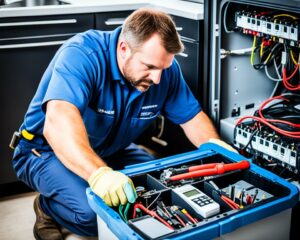
Is Fixing Your Fridge Worth It in 2026?

In today’s fast-paced world, refrigerators are indispensable kitchen appliances that support everyday life. As technology advances and sustainability becomes a greater priority, the refrigerator repair industry has transformed considerably. Because refrigerators can experience issues ranging from minor inconveniences to serious failures, understanding available repair options can help consumers save money and minimize disruption. To meet modern expectations, repair services have become faster and more customer-focused. Many repair companies now offer same-day appointments and use advanced diagnostic tools to pinpoint problems quickly and accurately. These improvements make professional repair a more practical—and often more cost-effective—choice than replacement. Ultimately, making informed decisions about refrigerator repair supports both household budgets and environmental responsibility by extending appliance life, reducing landfill waste, and limiting the resources required to manufacture new units.
Table of Contents
- Is Fixing Your Fridge Worth It in 2026?
- Key Takeaways
- Factors to Consider When Deciding to Repair or Replace Your Fridge
- Technological Advancements in Refrigerator Repair
- The Lifespan of Modern Refrigerators
- Common Refrigerator Problems and Their Repair Costs
- The Importance of Regular Maintenance for Your Fridge
- Energy Efficiency and Cost Savings in Refrigerator Repair
- The Future of Refrigerator Repair and Replacement
- Making the Decision for Your Fridge in 2026
- FAQs
- How do I know if my refrigerator needs repair or replacement?
- What factors should I consider when deciding to repair or replace my refrigerator in 2026?
- Is repairing an older refrigerator worth it in terms of energy efficiency?
- What are common refrigerator repairs that are usually worth fixing?
- How long does a typical refrigerator last before needing replacement?
- Can I repair my refrigerator myself, or should I hire a professional?
- Are there any environmental considerations when deciding to repair or replace a refrigerator?
- Will repairing my refrigerator affect its warranty?
- How can I estimate the cost of refrigerator repair in 2026?
- What advancements in refrigerator technology should I consider when replacing my appliance?
Key Takeaways
- Repairing a fridge can be cost-effective but depends on the appliance’s age and condition.
- Environmental benefits favor repairing over replacing due to reduced waste and resource use.
- Advances in technology have improved repair techniques and energy efficiency in modern refrigerators.
- Regular maintenance extends fridge lifespan and prevents costly repairs.
- Evaluating repair costs against replacement and energy savings is crucial for informed decisions in 2026.
Factors to Consider When Deciding to Repair or Replace Your Fridge
When your refrigerator starts malfunctioning, you’re often faced with a practical question: should you repair it or replace it? The right choice depends on a few key factors—starting with the unit’s age.If your refrigerator is approaching the end of its typical lifespan (about 10–15 years), replacement is often the wiser investment. At that stage, paying for repairs may only postpone the inevitable, especially if additional problems are likely to follow. In contrast, if your fridge is relatively new and has been properly maintained, repairing it is usually the more cost-effective option.Equally important is the type and severity of the issue. Some problems are minor and inexpensive to resolve, while others signal major system failures. For example, unusual noises or a small cooling inconsistency may require a simple repair. But if the compressor fails or there’s a serious refrigerant leak, replacement may be the more practical—and reliable—solution. By weighing age and repair complexity together, you can choose an option that fits both your budget and your long-term needs.
Cost is another major factor in the repair-versus-replace decision. Refrigerator repairs commonly range from $100 to $400, depending on the problem and labor involved. A new refrigerator, however, can cost anywhere from $500 to well over $2,000, depending on size, brand, and features.That price gap naturally makes repairs appealing, but it’s important to consider more than the upfront expense. If your refrigerator is older and begins needing repeated service, repair costs can accumulate quickly. Meanwhile, newer models typically offer better energy efficiency, which may reduce monthly utility bills and offset part of the purchase cost over time. A clear comparison should include both immediate costs and likely future expenses, including energy savings.
Environmental impact is also worth considering. Manufacturing and disposing of appliances carries a substantial environmental cost—from raw material extraction to landfill waste. Choosing to repair an existing refrigerator extends its usable life, reduces waste, and lowers demand for new production.That said, replacing an outdated model with a modern, energy-efficient refrigerator can also benefit the environment through reduced electricity use and lower emissions over time. The challenge is balancing those efficiency gains against the environmental burden of producing a new appliance and discarding the old one. By evaluating both the ecological trade-offs and your practical needs, you can make a decision that aligns with your priorities and minimizes overall impact.
Technological Advancements in Refrigerator Repair

Refrigerator repair has advanced significantly in recent years, driven largely by improvements in technology. As a consumer, you may have noticed how these innovations have made repairs faster, more accurate, and more reliable. Many technicians now use specialized diagnostic software that connects directly to a refrigerator’s control board, enabling them to detect problems quickly and with greater precision. This approach reduces guesswork, helps prevent misdiagnoses, and ensures the correct repair is completed without unnecessary delays. At the same time, developments in parts manufacturing and distribution have increased access to durable, high-quality replacement components. Even when a refrigerator requires model-specific parts, those items are often easier to locate and obtain than they were in the past. As technology continues to evolve, repair services are likely to become even more efficient—reducing downtime, improving outcomes, and keeping customer satisfaction at the center of the process.
The Lifespan of Modern Refrigerators
Understanding the typical lifespan of modern refrigerators is essential when deciding whether to repair or replace your unit. Most refrigerators last about 10 to 20 years, depending on the brand, model, and how well they’ve been maintained. If your fridge is nearing this range and beginning to show noticeable wear, it’s worth taking a closer look at its overall condition.If you have an older refrigerator that has performed reliably but is starting to decline, consider how much additional service you can reasonably expect after repairs. When a repair is likely to extend its life by only a year or two, replacing the unit often offers better long-term value. On the other hand, if your refrigerator is still relatively new and has been properly cared for, repairing it may be the more cost-effective option—allowing you to keep using a dependable appliance without the expense of buying a new one.
Common Refrigerator Problems and Their Repair Costs
| Average Repair Cost | 150 – 400 | Depends on type of issue and parts needed |
| Average New Refrigerator Cost | 800 – 2000 | Varies by brand, size, and features |
| Typical Refrigerator Lifespan | 10 – 15 years | Depends on maintenance and usage |
| Energy Efficiency Improvement (New vs Old) | 20% – 40% | New models use less electricity |
| Repair vs Replace Break-even Age | 8 – 10 years | Older than this, replacement often better |
| Environmental Impact | Lower with repair | Repair reduces waste and resource use |
| Warranty Coverage | Varies | Check if repair is covered under warranty |
When it comes to refrigerator repair, it helps to understand the most common problems you might encounter—and what they typically cost. Frequent issues include inconsistent temperatures, water leaks, and ice maker failures.If your refrigerator isn’t cooling properly, the cause is often a faulty thermostat or a failing evaporator fan. Repairs for these components usually run between **$100 and $300**. Water leaks are commonly triggered by a **clogged defrost drain** or a **worn door gasket**, and these fixes often fall in a similar price range.Ice maker problems, however, can vary more widely. Some are minor and inexpensive to resolve, while others require replacing the entire ice maker assembly, which can significantly increase the cost.Knowing these typical issues and price ranges can help you plan ahead and make informed decisions if your refrigerator ever needs service.
The Importance of Regular Maintenance for Your Fridge
Regular maintenance is essential for extending the lifespan of your refrigerator and reducing the risk of expensive repairs. As a homeowner, it’s wise to perform routine checks to ensure the appliance continues to run efficiently.A few simple steps can have a noticeable impact: clean the condenser coils, inspect the door seals for cracks or looseness, and make sure there is adequate clearance around the unit for proper airflow.In addition, scheduling professional service at least once a year can help detect minor issues before they develop into major failures. A technician can conduct a comprehensive inspection and tune-up, keeping your refrigerator operating smoothly while flagging early warning signs of trouble.By making maintenance a priority, you’ll not only protect your investment but also improve energy efficiency—helping lower your utility costs over time.
Energy Efficiency and Cost Savings in Refrigerator Repair
Energy efficiency is a key consideration when deciding whether to repair or replace a refrigerator. Older models often use substantially more electricity than newer units because they rely on outdated technology and less efficient designs. If your refrigerator is more than ten years old and needs frequent repairs, it may be worth assessing whether upgrading to an energy-efficient model would reduce your long-term operating costs.
Before repairing an older appliance, consider whether the work will actually improve its efficiency or merely return it to its previous performance. If the repair won’t lower energy consumption—or if its cost outweighs the potential savings on utility bills—replacement may be the more cost-effective choice over time. By weighing repair costs, expected energy savings, and the appliance’s remaining lifespan, you can make a decision that fits both your budget and your environmental priorities.
The Future of Refrigerator Repair and Replacement
Looking ahead, the future of refrigerator repair and replacement promises notable changes shaped by rapid technological progress and evolving consumer expectations. As smart home adoption accelerates, IoT-enabled refrigerators will become increasingly common. These connected appliances will deliver real-time performance insights, proactively flag maintenance needs, and notify you when specific components are nearing the end of their service life.At the same time, as sustainability becomes a stronger purchasing priority, manufacturers are likely to place greater emphasis on highly efficient, durable models built for long-term use rather than planned obsolescence. This shift may also encourage designs that are easier to service—supporting repairability through improved access to parts, clearer diagnostics, and more straightforward maintenance.As these trends continue to develop, keeping up with innovations in both smart technology and sustainable design will help you make informed decisions that support your home, your budget, and the environment.
Making the Decision for Your Fridge in 2026
As we approach 2026, deciding what to do with your refrigerator will require a balanced look at several factors—cost, environmental impact, evolving technology, and ongoing maintenance. Whether you repair or replace your fridge ultimately depends on its age, overall condition, and how well it fits your current household needs. Staying informed about common problems and typical repair costs, while keeping up with routine maintenance, can help extend the appliance’s lifespan and reduce the risk of unexpected expenses.In the end, the right choice should reflect both your financial priorities and your commitment to sustainability. As refrigeration technology continues to improve and consumer demand shifts further toward energy efficiency and longer-lasting appliances, making an informed decision will help you manage this essential part of modern homeownership with confidence.If you’re weighing whether a refrigerator repair is worth the investment in 2026, you may also benefit from guidance on using appliances more efficiently. This resource offers practical tips to improve performance and potentially extend appliance life—insights that may help shape your repair-versus-replace decision: **Appliance Tips for Efficient Use** — com/appliance-tips-for-efficient-use/
FAQs
How do I know if my refrigerator needs repair or replacement?
If your refrigerator is frequently breaking down, making unusual noises, not cooling properly, or has a repair cost that approaches 50% or more of the price of a new unit, it may be more cost-effective to replace it rather than repair it.
What factors should I consider when deciding to repair or replace my refrigerator in 2026?
Consider the age of the refrigerator, the cost of repairs, energy efficiency, warranty status, and how well the appliance meets your current needs. Newer models often offer better energy savings and features.
Is repairing an older refrigerator worth it in terms of energy efficiency?
Older refrigerators tend to be less energy-efficient compared to newer models. Repairing an old unit might not improve efficiency significantly, so replacing it with an Energy Star-rated model could save money on electricity bills over time.
What are common refrigerator repairs that are usually worth fixing?
Repairs such as replacing a thermostat, fixing a faulty compressor, or repairing door seals can be cost-effective if the refrigerator is relatively new and in good condition otherwise.
How long does a typical refrigerator last before needing replacement?
Most refrigerators last between 10 to 20 years. If your appliance is nearing or beyond this range, replacement might be a better option than repair.
Can I repair my refrigerator myself, or should I hire a professional?
Minor issues like cleaning coils or replacing door seals can sometimes be done by homeowners. However, complex repairs involving electrical components or refrigerant should be handled by certified professionals for safety and effectiveness.
Are there any environmental considerations when deciding to repair or replace a refrigerator?
Yes, repairing can extend the life of your appliance and reduce waste, but newer models are often more energy-efficient and environmentally friendly. Proper disposal or recycling of old refrigerators is important to minimize environmental impact.
Will repairing my refrigerator affect its warranty?
If your refrigerator is still under warranty, repairs should be done by authorized service providers to avoid voiding the warranty. Unauthorized repairs may void warranty coverage.
How can I estimate the cost of refrigerator repair in 2026?
Costs vary depending on the issue and location, but you can get estimates by contacting local appliance repair services. Comparing repair costs to the price of a new refrigerator helps in making an informed decision.
What advancements in refrigerator technology should I consider when replacing my appliance?
Look for features like improved energy efficiency, smart technology integration, better temperature control, and eco-friendly refrigerants when choosing a new refrigerator. These advancements can offer long-term savings and convenience.